HDR Broadcast Production in 2026: A Practical Guide for Engineers
High dynamic range has moved from premium feature to production standard. Here's everything broadcast engineers need to know to implement HDR workflows correctly.
Senior Technology Correspondent
High dynamic range has completed its journey from premium differentiator to production standard. In 2026, HDR is expected across virtually all broadcast platforms, and engineers who haven't yet mastered HDR workflows are finding themselves at a disadvantage. This guide provides a practical overview of what broadcast engineers need to know to implement HDR correctly.
Understanding the HDR Landscape
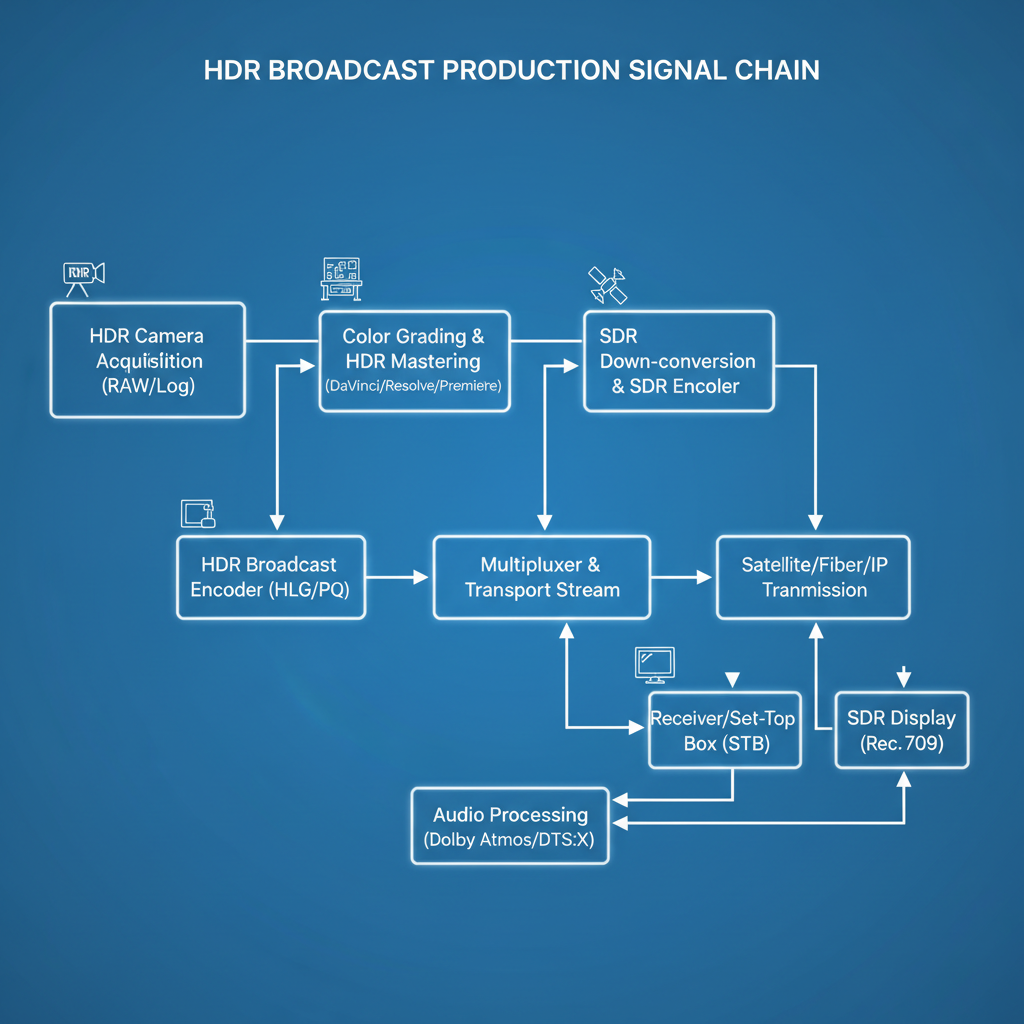
The HDR landscape for broadcast is dominated by two competing standards: HLG (Hybrid Log-Gamma) and PQ (Perceptual Quantizer, also known as HDR10). Understanding the differences between these standards and when to use each is fundamental to HDR broadcast production.
HLG was developed specifically for broadcast applications and has the significant advantage of being backward compatible with SDR displays. A single HLG signal can be displayed on both HDR and SDR monitors, making it the preferred choice for live broadcast applications where content will be distributed to a mix of HDR and SDR viewers.
PQ, on the other hand, is optimized for the highest possible HDR performance and is the standard of choice for premium streaming and physical media applications. PQ content requires separate SDR versions for non-HDR distribution, which adds complexity to the production workflow.
Camera and Capture Considerations
Capturing HDR content correctly starts at the camera. Modern broadcast cameras typically offer multiple log gamma curves that can capture the wide dynamic range required for HDR production, but choosing the right curve and exposure settings is critical to achieving the best results.
The key principle is to expose for the highlights rather than the midtones, as HDR's primary advantage is its ability to retain detail in bright areas that would be clipped in SDR production. This requires a different approach to exposure than many camera operators are accustomed to, and training is often necessary to ensure consistent results.
Monitoring and Quality Control
Accurate monitoring is perhaps the most critical aspect of HDR production. Without a properly calibrated HDR reference monitor, it's impossible to make reliable creative and technical decisions about HDR content. The investment in quality HDR monitoring is non-negotiable for any production that takes HDR seriously.
Tags