The Top 5 Challenges in MCRs & NOCs — And How to Stay Ahead
Master control rooms and network operations centers face mounting pressure from IP migration, remote operations, and 24/7 uptime demands. Here's how leading facilities are addressing the biggest challenges.
Senior Technology Correspondent
Master control rooms and network operations centers are the nerve centers of modern broadcast operations, and the demands placed on these facilities have never been greater. The transition to IP-based infrastructure, the rise of remote operations, and the relentless pressure to maintain 24/7 uptime are creating new challenges that require new approaches.
Challenge 1: IP Migration Complexity
The transition from SDI to IP-based infrastructure is the defining challenge for MCRs and NOCs in 2026. While the benefits of IP are well-established — flexibility, scalability, cost efficiency — the migration process is complex and fraught with potential pitfalls. The most successful facilities are those that have taken a phased approach, migrating individual workflows while maintaining SDI fallback capabilities.
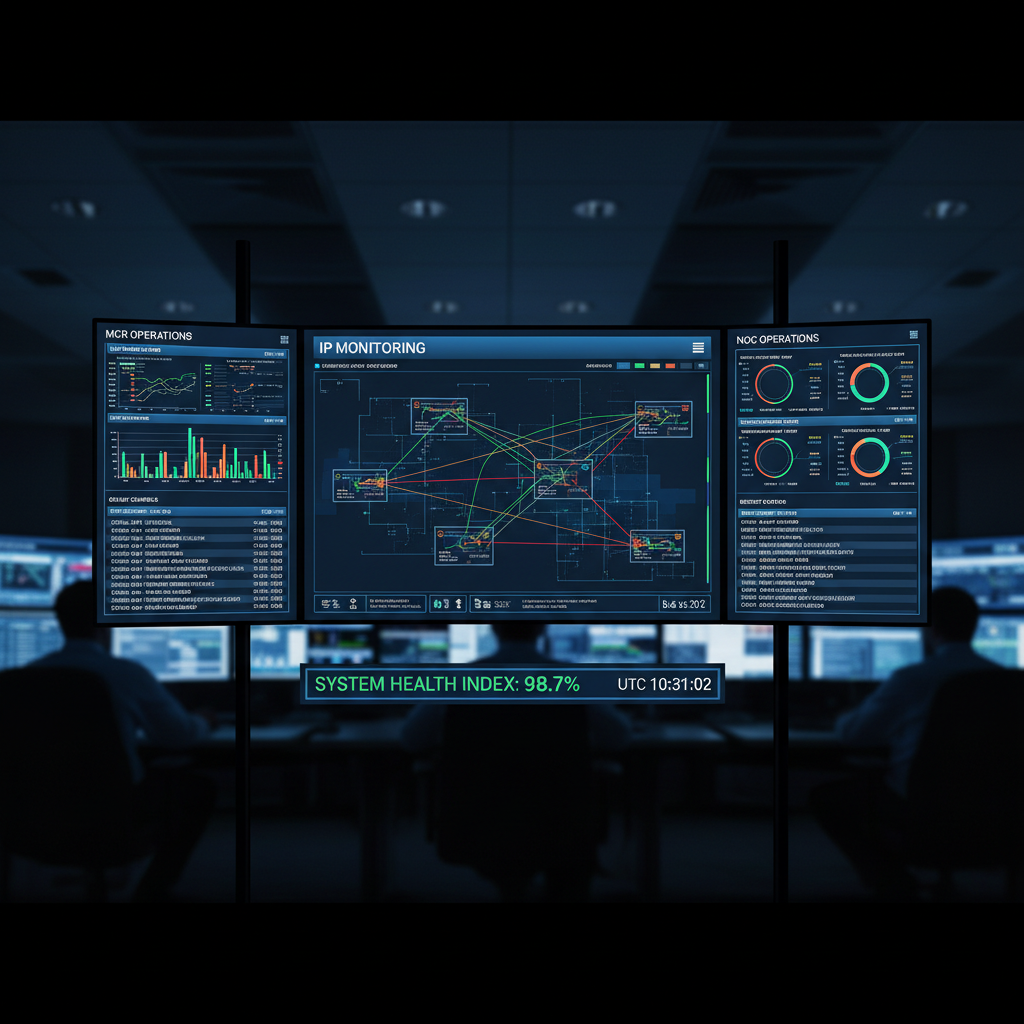
Key to successful IP migration is investment in monitoring and diagnostic tools that can provide the same level of visibility into IP infrastructure that engineers have traditionally had with SDI systems. Without this visibility, troubleshooting becomes exponentially more difficult.
Challenge 2: Remote Operations Management
The shift to remote operations, accelerated by the pandemic, has created new challenges for MCR and NOC management. Ensuring that remote operators have the same level of control and visibility as on-site staff requires significant investment in remote access infrastructure and monitoring tools.
Security is a particular concern for remote operations. MCRs and NOCs that have opened their systems to remote access must implement robust security measures to prevent unauthorized access while maintaining the low-latency performance that broadcast operations require.
Challenge 3: Monitoring at Scale
As broadcast operations become more complex, the volume of monitoring data that MCRs and NOCs must process has grown dramatically. Traditional approaches to monitoring, which relied on human operators to watch multiple screens, are no longer adequate for the scale and complexity of modern broadcast infrastructure.
AI-powered monitoring systems that can automatically detect anomalies and alert operators to potential issues before they become outages are becoming essential tools for MCR and NOC operations. These systems can process vastly more monitoring data than human operators, identifying subtle patterns that might indicate developing problems.
Challenge 4: Skills Gap
The broadcast industry is facing a significant skills gap as experienced engineers retire and the technology landscape evolves rapidly. MCRs and NOCs need engineers who understand both traditional broadcast technology and modern IP networking, a combination that is increasingly rare.
Challenge 5: Cybersecurity
Broadcast infrastructure has become an increasingly attractive target for cyberattacks, and MCRs and NOCs are on the front line of this threat. Implementing robust cybersecurity measures without compromising the performance and reliability that broadcast operations require is one of the most difficult challenges facing the industry today.
Tags